Loading...
About Us
Our Story
From a small community recycling initiative to a leading, green social enterprise — discover the journey of Wezesha Industries.
Our Story
From Waste Collectors to Green Catalysts
The Origin: The Recycling Middlemen (2013 – 2015)
The story of Wezesha Industries began in 2013 with The Recycling Middlemen (TRM), a formerly registered for-profit enterprise which offered recyclable waste collection services to companies in Bulawayo. By 2015, after partnering with the Youth Press Bureau, TRM had grown into one of Bulawayo's largest, formal suppliers of cardboard and plastic to National Waste Collections.
The Turning Point: A Crisis of Conscience
Despite the commercial success of TRM, our founder, Sinqobile, began to witness a troubling reality: formal industry success was driven by waste cartels that had power over an invisible, exploited network of informal waste-pickers. The "aha" moment was a visceral one.
During a routine collection, the TRM team encountered a scene of tragic desperation where two, male waste-pickers had fought violently over the very materials TRM was contracted to collect. This encounter exposed a sector governed by exclusion, where women often laboured in hazardous conditions with their children in tow, earning as little as $3 USD a month.
This crisis of conscience stripped away the corporate veneer of the recycling industry, revealing that the traditional business model was not just competitive—it was fundamentally predatory. It became clear that profit could no longer be decoupled from the dignity of the people at the margins. This realization became the catalyst for Wezesha Industries, shifting the focus from simply managing waste to co-creating an inclusive ecosystem that transforms "waste-picking" into a path for gainful, formal entrepreneurship.
Beyond the Labels: Redefining Circumstantial Entrepreneurship
Driven to find a more equitable model, Sinqobile pursued postgraduate research at the University of Cape Town as a Bertha Scholar for Social Innovation & Entrepreneurship. Her approach was radical and deeply personal; she adopted an ethnographic methodology, living and working alongside informal waste-pickers whom she identified not as victims, but as "circumstantial social entrepreneurs."
Through this collaborative immersion, a new identity emerged. The community rejected derogatory labels often used to describe informal waste pickers such as izibhonda ("crazy, homeless people") and co-created a term that reflected their true economic value: "Above Ground Miners." This linguistic shift sparked a total transformation in mission, evolving her previous company into The Above Ground Mining Project (TAGMP)—an action-research pilot dedicated to building formal market linkages and dismantling negative stereotypes.
The Evolution: The Birth of Wezesha (2021–2022)
Between 2021 and 2022, supported by a seed grant from the FREE Fund (Women Win, Netherlands), TAGMP began rapid-testing a green economy social enterprise model designed to empower differently-abled adolescent girls, young women, and youth to take up gainful opportunities in the recycling space.
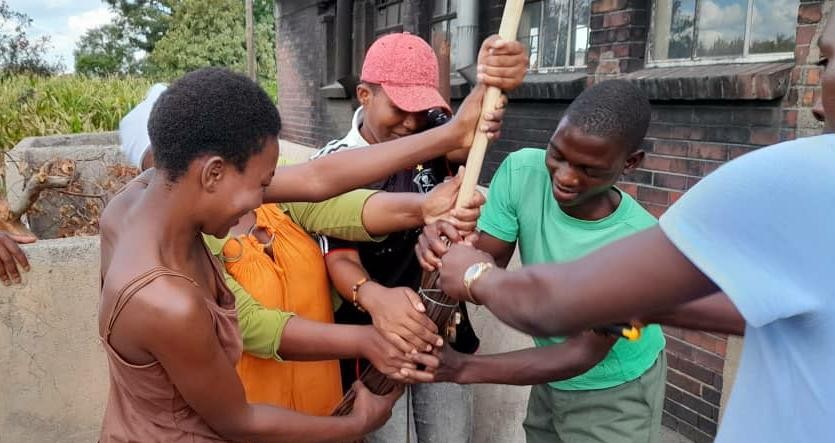
The project successfully trained 120 young women in green skills and thereafter incubated MVPs that produced a variety of upcycled products including sweeping brooms made from PET plastic waste. This successful testing phase led to the formalization of the Wezesha Industries' business model in 2022.
Our Journey
Milestones That Define Us
A decade of impact, innovation, and inclusive growth.
2013
The Recycling Middlemen
Sinqobile Ndlovu founded The Recycling Middlemen (TRM), a registered for-profit enterprise offering recyclable waste collection services to companies in Bulawayo.
2015
A crisis of conscience
During a routine collection, the TRM team encountered a scene of tragic desperation where two, male waste-pickers had fought violently over the very materials TRM was contracted to collect.
2018
Bertha Scholar for Social Innovation
Witnessing the exploitation of informal waste-pickers, Sinqobile pursued postgraduate research at UCT as a Bertha Scholar, living alongside waste-pickers and co-creating the 'Above Ground Miners' identity.
2019
The Above Ground Mining Project
TRM evolved into The Above Ground Mining Project (TAGMP) — an action-research pilot dedicated to building formal market linkages and dismantling negative stereotypes around waste-picking.
2021
The Birth of Wezesha
Supported by a seed grant from the FREE Fund (Women Win, Netherlands), TAGMP began rapid-testing a green economy social enterprise model, training 120 young women in green skills.
2022
Official Registration
Formally registered as Wezesha Industries (PBC 362/2022) after successfully incubating MVP products including eco-brooms from PET plastic waste. A new chapter of growth begins.
2024
Scaling Impact
Grew to 125+ members across multiple green production hubs, reaching over 6,000 people through programs and campaigns, with international partnership recognition.
Our Mission
“To build resilient communities by facilitating access to inclusive, decent, and gender-centric entrepreneurship opportunities, positioning women and youth as the primary engines of green value chains.”
Our Vision
“To empower communities to make climate action part of everyday life.”
How We Work
The Wezesha Growth Model
We operate at three levels — fast-tracking launches, nurturing start-ups, and scaling innovations.
01
The Catalyst
We fast-track the launch of green business models (MVPs), helping women and youth transition from 'wanna-preneurs' to 'hustler-preneurs' with increased speed and reduced capital risk.
02
The Incubator
We act as a 'nursery' for early-stage start-ups, offering the structural foundation and mentorship necessary to survive the fragile initial phases of business.
03
The Accelerator
We scale grassroots innovations into market-ready products, integrating emerging enterprises into resilient, sustainable value chains.
Our Values
What We Stand For
The principles that guide everything we do.
Inclusiveness
We believe in creating opportunities for everyone, regardless of background, gender, or ability.
Ubuntu
I am because we are. We thrive through community, solidarity, and mutual support.
Mutual Respect
We honour the dignity and contribution of every individual in our ecosystem.
Authenticity
We stay true to our roots, our mission, and the communities we serve.
Learning & Innovation
We constantly seek creative solutions to transform waste into value and challenges into opportunities.
Partnership & Collaboration
We believe in the power of collaboration to amplify impact and drive systemic change.
Sustainability
Everything we do is designed to create lasting positive impact for people and planet.
Global Goals
SDG Alignment
Our work contributes to the United Nations Sustainable Development Goals.
1
No Poverty
Informal recyclers earn $6–$80/month. We formalise these roles and increase earning potential through value-addition and direct market access.
5
Gender Equality
Women represent 80%+ of the bottom recycling value chain yet earn the minimum $6/month. We create flexible, gender-centric models that accommodate female entrepreneurs.
8
Decent Work & Economic Growth
We advocate for waste management as a productive economic sector — shifting the narrative from 'scavenging' to a respectable, dignified profession.
10
Reduced Inequalities
Middlemen earn up to $400/month while primary harvesters earn a fraction. Our 'shared value' model bypasses exploitative structures for equitable profit distribution.
11
Sustainable Cities
Targeting high-need areas like Ngozi Mine in Bulawayo — facilitating clean-up campaigns and creating green spaces in marginalised communities.
12
Responsible Consumption
Bridging the gap between waste generators and the recycling industry, promoting separation-at-source to support Smart City development.
13
Climate Action
Waste management is a critical pillar of climate action. We reduce waste, lower emissions, and build climate literacy through education and community programmes.
17
Partnerships for the Goals
We actively seek multi-stakeholder partnerships across government, private sector, and international NGOs to build a sustained, inclusive green movement in Africa.
Our Team
Meet the People Behind the Mission
Dedicated individuals driving green economic transformation.
S
Sinqobile Ndlovu
Founder & Executive Director
Sinqobile is a passionate social entrepreneur, green economy advocate, and Bertha Scholar for Social Innovation & Entrepreneurship (University of Cape Town). She founded Wezesha Industries after over a decade of working with informal waste-pickers, co-creating the 'Above Ground Miners' identity that transformed a community's self-perception and economic trajectory. Her mission: to ensure that the least powerful can operate alongside the most powerful economic players.
Want to Know More?
Download our complete company profile or get in touch with us directly.